

Sensor interface IC design
Custom sensor interface ICs delivering reliable intelligence from raw sensor data – optimising signal integrity, reducing power consumption, and simplifying integration for automotive, industrial, and aerospace.
Swindon Silicon Systems at a glance
design experience
shipped
per year
in TPMS
cleanroom space
Delivering technical excellence and commercial advantage
Signal integrity at source
Condition signals at the sensor before noise or interference degrades accuracy. Our analogue front-ends deliver sub-microvolt noise floors with superior signal fidelity in harsh environments.
Precision tailored to your needs
Select exact ADC resolution (12 to 24-bit), sampling rates, channel count, and processing architecture. No wasted silicon, no unnecessary power, no performance compromises.
Integrated signal processing
Combine amplification, filtering, conversion, temperature compensation, and digital processing in a single IC. Implement custom algorithms for linearisation, calibration, and fault detection in hardware.
IP protection
Secure your proprietary sensor algorithms, calibration methods, and signal processing techniques within custom silicon that competitors cannot reverse-engineer or replicate.
BOM cost reduction
Replace 10-15 discrete components per channel with one integrated IC. Lower material costs, simplified logistics, and improved manufacturing yields.
Reduced power consumption
Purpose-built power management and optimised signal chain architecture reduce power consumption versus discrete solutions.
Supply chain simplification
One qualified supplier replaces multiple vendor relationships. One part number, one qualification, and zero obsolescence surprises with 20+ year availability planning.
Faster time to market
Integrated solutions reduce PCB design complexity, simplify EMI/EMC compliance, and accelerate system validation. Get to production faster with fewer design iterations.
Discrete components vs. integrated sensor interface IC
| Consideration | Discrete Solution | Integrated Sensor Interface IC |
|---|---|---|
| Component count | Multiple parts per channel | Single integrated IC |
| PCB footprint | Larger board area | Compact, optimised design |
| Power efficiency | Higher cumulative consumption | Purpose-built power management |
| Supplier management | Multiple vendor relationships | Single qualified source |
| Obsolescence planning | Staggered component lifecycles | Coordinated 20+ year availability |
| Signal integrity | PCB traces susceptible to noise | Optimised integrated signal routing |
| Qualification complexity | Each component certified separately | Single part certification |
| Supply resilience | Allocation risks during shortages | Controlled production capacity |
Cost-effective from 1,000+ annual units with long-term supply guarantees.
Sensor interface solutions across applications
Whether measuring pressure, position, proximity, or temperature, Swindon Silicon designs custom sensor interface ICs that deliver reliable data in demanding conditions.
Pressure sensors
Custom MEMS sensor interface ICs with capacitive and piezoresistive conditioning with on-IC temperature compensation, multi-point calibration, and ultra-low offset drift (< 0.1% FSO over temperature).
Proven in TPMS systems (global market leader), industrial process monitoring, and aerospace altitude and cabin pressure sensing.

Proximity & distance sensors
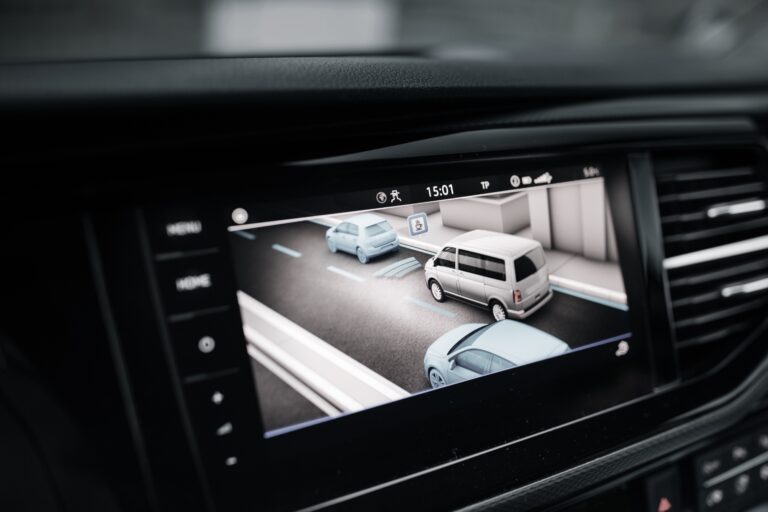
Capacitive sensor drive and measurement circuits with ultrasonic time-of-flight processing and configurable detection thresholds and hysteresis.
Used in collision avoidance and parking assistance, liquid level sensing in tanks and reservoirs, and object detection for factory automation.

Position & motion sensors
Hall effect and magnetoresistive sensor interfaces with inductive position sensor (LVDTs, RVDTs) conditioning, delivering angular and linear measurement to < 0.1° accuracy.
Deployed in electric motor commutation, suspension position sensing for active damping, and robotic joint position feedback.

Temperature & environmental sensors
Multi-channel RTD and thermocouple conditioning with high-accuracy measurement (±0.1°C typical) and sensor fault detection (open/short circuit).
Deployed in automotive HVAC climate control, industrial process temperature monitoring, and aerospace environmental control systems.
Explore sensor interface ASICs for your industry:
Is a custom sensor interface IC right for your application?
Custom sensor interface ICs deliver the best value when you need:
- Multi-year product lifecycles with long-term supply assurance
- Production volumes above 1,000 units annually
- Performance or power consumption beyond off-the-shelf solutions
- IP protection for proprietary sensor algorithms
- BOM cost reduction through component consolidation
Particularly valuable for sensor ASICs, integrated sensor interfaces, and automotive sensor interface solutions where reliability and long-term availability are critical.
Still evaluating your options?
Deliverables:
- Technical specification
- Architecture recommendations
- Cost analysis
- Timeline projection
- Risk assessment
Sensor interface IC feasibility studies
Evaluate your project’s viability before full commitment. Our comprehensive feasibility studies provide clear technical and commercial guidance to make confident investment decisions.
Requirement analysis
We work with your team to thoroughly analyse your technical needs, performance requirements, and commercial objectives. From sensor characteristics to target production volumes.
Technical evaluation
Our engineers assess technical feasibility, identify potential challenges, and develop preliminary architecture recommendations tailored to your sensor interface requirements.
Economic analysis
We provide a comprehensive cost-benefit assessment, including development costs, unit pricing projections, and ROI timeline, giving you the financial framework to justify the investment.
Deliverables:
- Technical specification
- Architecture recommendations
- Cost analysis
- Timeline projection
- Risk assessment
Complete sensor interface signal chain design
Our sensor interface ICs handle the complete signal path from raw sensor output to processed digital communication, with each stage optimised for your application requirements.
Analogue front-end
Our analogue design team creates precision front-end circuits optimised for your sensor’s characteristics and operating environment.
- Analogue front-end IC design with signal conversion and conditioning tailored to your sensor characteristics, leveraging proven IP blocks deployed in 1B+ ASICs
- Precision amplification and measurement proven in harsh automotive (-40°C to +150°C) and safety-critical applications
- Advanced filtering techniques developed through decades of solving EMI challenges in automotive and industrial environments
- Power regulation and control for stable sensor excitation
Signal conversion
We select the optimal ADC architecture for your application, whether you need precision or speed.
- High-resolution conversion: 12 to 24-bit ADC options for precision measurement
- Multi-channel capability for systems monitoring multiple sensors
- Flexible sampling rates from ultra-low power to high-speed acquisition
- Integrated voltage references for measurement stability
Digital processing & calibration
Integrated microprocessor and microcontroller solutions from 8-bit to ARM Cortex cores enable custom signal processing directly in hardware.
- Custom processing blocks tailored to your application needs
- Memory integration, including Flash, SRAM, and non-volatile memory for calibration data
- Temperature compensation algorithms implemented in firmware
- Diagnostic capabilities for sensor health monitoring
Communication interfaces
Connect sensors to your system through wired or wireless interfaces integrated directly into the IC.
Wired: SPI, I²C, CAN for automotive and industrial networks
Wireless: Sub-GHz RF for long-range, low-power applications | Bluetooth LE for IoT connectivity
Integrating wireless eliminates external RF modules, reduces BOM cost, optimises power management, and enables extended battery life.
Learn more about our complete capabilities.
Proven expertise for demanding applications
- Mixed-signal analogue + digital design
- High-voltage and low-noise circuitry
- MEMS and sensor integration
- Power management and RF communication ICs
- Wafer-level and package-level testing in-house
- Environmental qualification to automotive and aerospace standards
- 550m²+ cleanroom and test facilities
- Manufacturing processes aligned with IATF 16949 principles for zero-defect performance
- ISO9001: Quality Management
- ISO14001: Environmental Management System
- ISO45001: Occupational health and safety management systems
40+ years of sensor interface IC design expertise across automotive, industrial, and aerospace markets.
Sensor interface IC FAQs
What is a sensor interface IC?
A sensor interface IC is a custom integrated circuit designed to condition, process, and communicate data from sensors. Also called ASIC signal conditioning solutions, these ICs combine analogue signal conditioning (amplification, filtering), analogue-to-digital conversion, digital processing, and communication interfaces in a single integrated circuit, replacing multiple discrete components with an optimised solution.
How does a sensor interface work?
A sensor interface works by taking the raw output from a sensor (typically a small analogue voltage or current signal) and transforming it into usable digital data. The process involves amplifying the sensor signal, filtering out noise, converting from analogue to digital format, applying calibration and temperature compensation, and transmitting the processed data via wired (SPI, I²C, CAN) or wireless (Sub-GHz RF, Bluetooth LE) communication interfaces.
What are the advantages of sensor interfaces?
Custom sensor interface ICs deliver multiple advantages: improved signal integrity by eliminating PCB noise pickup through integrated routing, reduced power consumption via purpose-built power management, smaller PCB footprint by consolidating 10-15 discrete components, simplified supply chain with one qualified source instead of multiple vendors, enhanced reliability through matched on-IC components, and long-term supply security with 20+ year availability planning.
When would a sensor interface be used?
Custom sensor interface ICs are ideal for applications requiring multi-year product lifecycles with assured long-term supply, production volumes typically above 1,000 units annually, performance or power requirements beyond standard solutions, IP protection for proprietary sensor algorithms, or significant BOM cost reduction through component consolidation. Common applications include automotive TPMS, industrial process monitoring, aerospace environmental systems, and IoT sensor networks.
What's the typical development timeline for a sensor interface ASIC?
Most sensor interface IC projects are completed within 12-24 months from initial consultation to production-ready silicon. The timeline includes consultation and feasibility assessment design and development, prototyping and validation, and production qualification.
Can you integrate wireless communication into a sensor interface IC?
Yes. Integrating wireless communication (Sub-GHz RF or Bluetooth LE) directly into the sensor interface IC eliminates external RF modules, reduces BOM cost and PCB area, optimises power management between sensing and transmission, and enables multi-year battery life from coin cells. This approach is increasingly used in domestic appliances, smart home devices, remote industrial monitoring, TPMS, and IoT sensor applications where wired connections are impractical.