
Sensor interface ASIC design examples
Swindon Silicon Systems specialises in sensor interface ASIC design, delivering precision signal processing, IP protection, and long-term supply assurance for automotive, industrial, and aerospace applications.
Swindon Silicon Systems at a glance
TPMS market
design experience
Precision signal processing for demanding applications
Custom sensor interface ASICs are essential for modern applications, from automotive systems to industrial automation.
Key design challenges:
- Signal integrity – Amplifying extremely small analogue signals whilst minimising noise
- Environmental compensation – Accounting for temperature and other factors affecting performance
- Power efficiency – Optimising battery life in wireless and portable sensors
Swindon Silicon delivers proven sensor interface design solutions across automotive, industrial, and aerospace applications.
Why use custom sensor interface ASICs?
Custom sensor interface ASICs deliver precision signal processing, IP protection, and supply chain benefits that discrete component solutions cannot match.
- Optimised performance – Purpose-built circuitry for your specific sensor and application requirements
- BOM reduction – Integrate multiple components into a single chip, reducing costs and complexity
- Long-term supply assurance – Dedicated manufacturing with obsolescence protection built in
Sensor interface ASICs are particularly valuable where applications demand high accuracy, compact designs, and reliable long-term availability.
Proven sensor interface solutions across applications
Swindon Silicon has designed and delivered custom sensor interface ASICs across automotive, industrial, aerospace and consumer applications.
Resistive sensor interface

Tyre pressure monitoring systems ASIC
Swindon Silicon are global leaders in TPMS, accounting for approximately 45% of the global TPMS business.
Sensing pressure is used in many applications, with TPMS being widely adopted in automotive applications.
Our resistive sensor interface uses Wheatstone Bridge structures formed as MEMS devices, allowing efficient integration with an ASIC sensor interface die in a System in Package (SiP) configuration.
Haptic sensor interface

Touch feedback IC
Swindon Silicon has developed haptics technology for automotive and industrial applications.
Haptic technology relates to the sense of touch and tactile feedback, and it's already found in many consumer products, most notably in mobile phones. Haptic technology is now rapidly being adopted by the automotive and industrial industries as a way to provide users with a more informed and intuitive experience.
Optical image sensing
Machine vision sensors IC
Swindon Silicon partnered with a world leader in precision imaging to develop an optical image sensor for machine vision applications.
Automation across several industries has significantly increased demand for optical image sensors. Technological breakthroughs have advanced new optical image sensors that make processes more efficient and significantly improve accuracy across various applications.
Inductive sensor interface
Proximity and position sensing ASIC
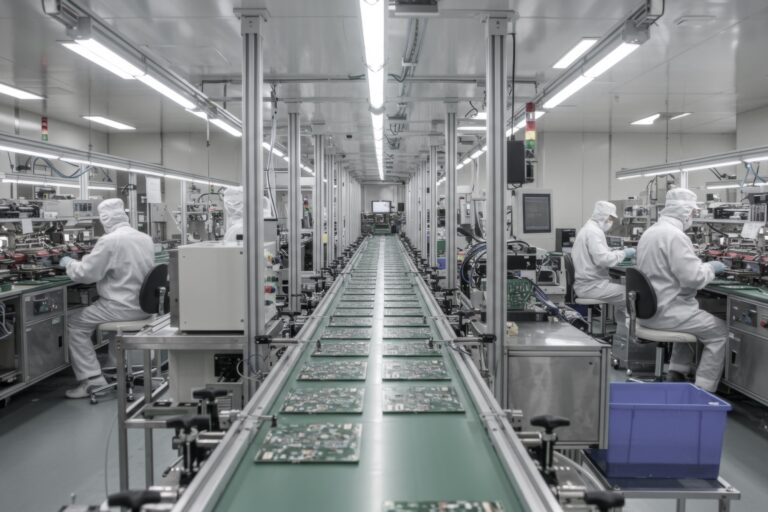
Swindon partners with global industrial leaders to provide accurate sensor interfaces for smart factory and machine vision applications.
This sensor type is particularly useful for no-contact applications or dirty environments, as the sensing element is unaffected by dirt. Applications include factory automation, proximity detectors, and automated industrial processes.
Magnetic sensor interface
Encoder ASICs
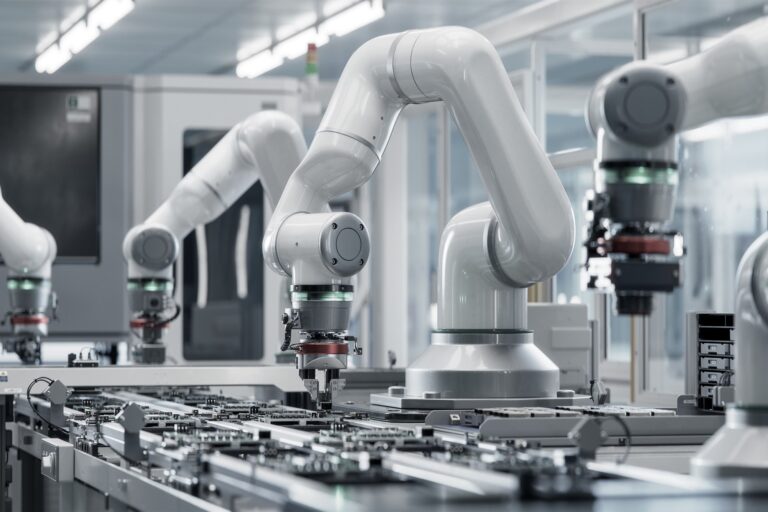
Swindon Silicon is partnered with a global automation equipment manufacturer to provide innovative ASICs for their positional encoders used in factory automation applications.
Magnetic sensors use the Hall Effect and magneto-resistive techniques, measuring magnetic field strength to provide location information. They are commonly used in factory automation and lighting applications.
Capacitive sensor interface

Touch screen IC
Swindon Silicon works with a leading industrial touch screen manufacturer to provide an accurate positional touch screen ASIC for its touch screen products.
By measuring and detecting changes in capacitance, it is possible to determine position. These sensors are useful for proximity detection of non-metallic items as they do not rely on conductance.
Acoustic sensor interface

Hearing protection ASIC
Swindon is partnered with a leading headset manufacturer to provide a state-of-the-art noise-cancelling solution for an industrial headset, which is used in many spheres of operation, including Formula One (F1) motor racing.
Today's acoustic sensors can measure wave characteristics (amplitude, phase, polarisation), wave velocity and spectrum.
Latest updates & insights
Sensor interface design FAQs
What is a sensor interface and how does it work?
A sensor interface is the system that links a physical sensor to the end user or processing unit. It receives analogue signals (such as voltage, current, or resistance), conditions and converts them into digital data, and transmits this through a wired or wireless protocol. In short, it turns real-world measurements into usable information.
Where are sensor interfaces used?
Sensor interfaces are found anywhere sensors are used, from automotive systems and industrial automation to healthcare and consumer electronics. They’re essential in applications where real-time measurement of variables like distance, temperature, or pressure is required.
What are the main types of sensors used for interfacing?
Four core sensor types are resistive, capacitive, inductive, and optical. Each detects changes in a specific physical property, for example, resistance, capacitance, electromagnetic fields, or light, and requires an appropriate interface to process its signals.
How long does it take from enquiry to a finished ASIC?
Timelines vary depending on how complete the customer specification is, the quotation and approval process, and the complexity, but most ASICs are delivered within 12–24 months, including specification, prototyping, and production.
Where are your sensor interfaces commonly used?
Our sensor interfaces are widely used in automotive systems and smart factories (Industry 4.0), as well as in any application that requires accurate, reliable measurement and communication between sensors and control systems.