
Modern vehicles are, in large part, sensor systems on wheels. From the moment the engine starts to the moment the car parks, electronic circuits are measuring pressure, position, current, temperature, and rotational speed. They do so continuously, in real time, in conditions that would cause most commercial electronics to fail.
The integrated circuits doing this work are not general-purpose devices. They are engineered specifically for the application, the environment, and the lifecycle demands of the vehicle systems they serve. That is what an Application-Specific Integrated Circuit (ASIC) is: a device designed from the ground up to perform a defined function in a defined environment, rather than a catalogue component adapted to a purpose it was not designed for.
This guide covers where ASICs add specific value in automotive applications, what the key design requirements are, and how to assess whether a custom IC is the right solution for a particular vehicle system.
What is an automotive ASIC?
An automotive ASIC is an integrated circuit designed to perform a specific function within a vehicle system. Unlike general-purpose ICs available from component distributors, an automotive ASIC is engineered to the precise performance, environmental, and reliability requirements of the application. This includes the demanding qualification standards that automotive electronics are held to.
Many automotive ASICs are mixed-signal devices, integrating analogue circuits that interface with physical sensors and actuators alongside digital circuits that process, condition, and communicate the resulting data. The analogue portion of the design is where much of the engineering challenge lies: reading small, noisy signals from sensors located in electromagnetically hostile environments, conditioning them to the accuracy the system requires, and maintaining that accuracy across the full operating temperature range of the vehicle.
Automotive-grade performance means something specific. Devices need to operate reliably from -40°C to +150°C. They need to meet AEC-Q100 qualification requirements. And they need to be supportable throughout vehicle production and service lifetimes that can span fifteen to twenty years, a timescale during which standard catalogue parts are often discontinued.
Why automotive engineers choose ASICs
The decision to develop a custom IC for an automotive application is rarely driven by a single factor. It is usually the combination of requirements that no standard part can meet simultaneously. The most common drivers are listed below.
Performance that standard components cannot match
Sensor signals in automotive environments are often small, noisy, and generated in locations close to significant sources of electromagnetic interference such as electric motors, power inverters, high-frequency switching circuits. Getting an accurate, reliable reading from a pressure sensor in a tyre, a position sensor on a motor shaft, or a current sensor in a battery management system requires signal conditioning electronics optimised for that specific sensor type and environment.
A mixed-signal ASIC integrates amplification, filtering, calibration, and compensation into a single device matched precisely to the sensor it is reading. The result is a signal chain that is both shorter and better. This means fewer interfaces between the sensing element and the processed output, and a circuit architecture that addresses the actual sources of error rather than working around them with general-purpose headroom.
Power and weight reduction
Automotive system designers are under sustained pressure to reduce both power consumption and mass, driven by emissions regulations, EV range requirements, and the cumulative weight of the electronics content that modern vehicles carry.
An ASIC is sized for the signal bandwidths and logic functions it actually needs. It does not draw the quiescent current of a general-purpose device designed to cover applications far broader than the one it is being used for. The power saving per device is a meaningful contribution to system-level efficiency targets.
Consolidation and miniaturisation
Consolidating the functions of several discrete components into a single ASIC reduces PCB area, component count, and assembly complexity. For applications where board space is constrained, such as tyre pressure monitoring sensors where the entire electronics assembly has strict size and weight limitations, this is not a marginal advantage. It is often the only way to achieve the required functionality within the available physical envelope.

Long-term supply assurance
Automotive supply chains operate on timescales that are fundamentally misaligned with the product lifecycle of standard semiconductor components. A vehicle programme may run for seven to ten years of production, with a further ten to fifteen years of service parts obligation. A catalogue IC supporting that programme may be discontinued within five years of launch.
With an ASIC, the supply relationship is direct and formally managed. The design is yours. Long-term wafer storage, second-source options, and process transfer planning can all be put in place at the outset, giving the programme a supply assurance strategy that is not dependent on a component manufacturer’s portfolio decisions. A reliable ASIC supplier can support its customers if underlying process technology does lead to end of life for an ASIC. This includes providing them with structured options such as last time buys and process transfers, as opposed to abruptly discontinuing a product line.
IP protection
In automotive systems where the sensing algorithm, calibration method, or signal processing architecture is a source of competitive differentiation, an ASIC embeds that IP in silicon. It cannot be read out, reverse-engineered, or replicated from a component marking the way a software or FPGA-based implementation can. Swindon Silicon designs with 100% IP protection as a baseline requirement, with no standard parts in the design that could expose the architecture.
Automotive ASIC applications
ASICs are used throughout the vehicle wherever precision sensing, low power, long life, or the limits of standard catalogue components make a purpose-built solution the right answer.
Tyre pressure monitoring systems (TPMS)
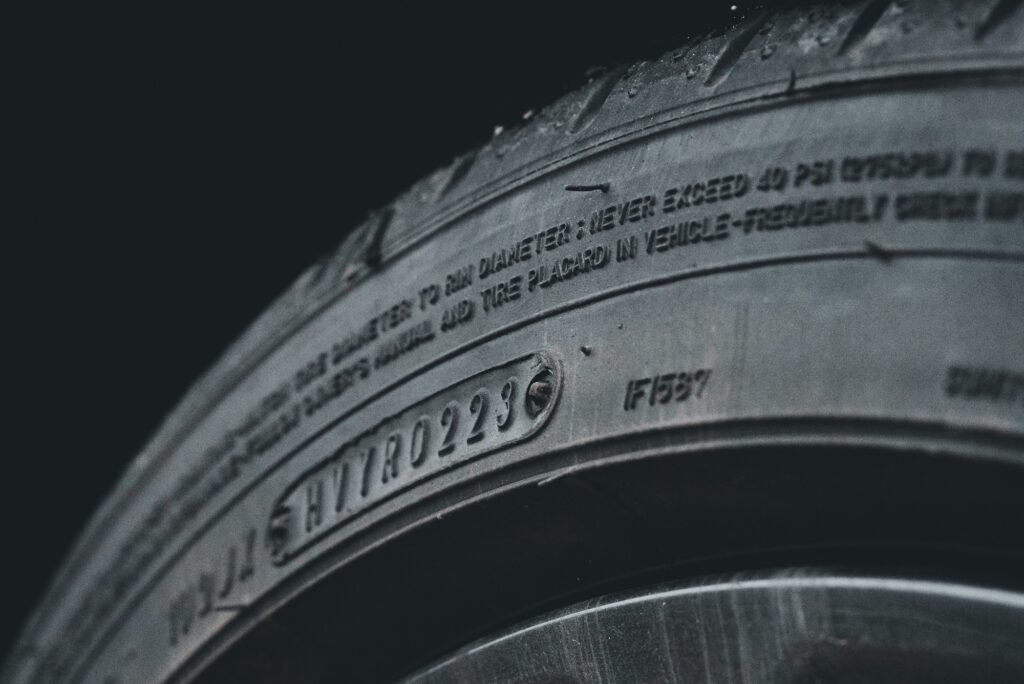
TPMS is arguably the most demanding packaging challenge in automotive electronics. The sensor module – pressure sensor, signal conditioning electronics, RF transmitter, accelerometer, and battery – must fit inside a mechanical housing in the tyre cavity on the backside of the valve stem or be mounted on the wheel rim, survive tyre-changing operations and road debris impacts, and maintain its calibration and transmission accuracy over the life of the vehicle.
Swindon Silicon Systems developed its first TPMS ASIC in 1999 and has since become a global market leader in direct TPMS. The ASIC integrates pressure sensing, signal conditioning, radio frequency communication, and power management into a single device optimised for the size, power, and environmental constraints of the application. With more than 1 billion ASICs in the field and 150 million die shipped annually, this is one of the most demanding long-term automotive supply programmes in the industry.
Braking systems
Wheel speed sensors, brake pressure monitoring, and electronic stability control systems all depend on high-accuracy signal conditioning ICs that can maintain reliable performance in the thermal and mechanical environment of the brake assembly. Braking systems often carry some of the most stringent functional safety requirements in the vehicle — frequently ASIL D at the system level under ISO 26262 — though the integrity level assigned to any individual ASIC function within that system will depend on how safety requirements are allocated across the architecture. The ASIC design and verification process needs to reflect whatever diagnostic coverage, redundancy, and failure mode analysis the specific application demands.
ASICs for braking applications are designed for low power consumption, high noise immunity from the high-current switching in the brake actuator circuits, and reliable operation at the elevated temperatures generated by the braking system itself.
Sensor interfaces
Modern vehicles carry a large number of sensors measuring everything from throttle and pedal position to suspension travel, steering angle, and exhaust gas composition. These sensors generate signals of widely varying amplitude and bandwidth, and the conditioning electronics need to be matched to the specific sensor technology in use (Hall Effect, magneto-resistive, piezoelectric, or capacitive) as well as the noise environment of the application.
Sensor interface ASICs address this precisely. Rather than adapting a general-purpose amplifier and ADC combination to a sensor type it was not optimised for, a custom IC can integrate the full signal chain (amplification, filtering, offset and gain compensation, temperature correction, and digital output) in a single device calibrated to the specific sensor and application. For a detailed look at the design considerations involved, our guide to magnetic position sensors covers the principal technologies and the signal conditioning challenges they present.

Motor control
The transition to electrified drivetrains (hybrid vehicles, battery electric vehicles, and 48V mild hybrid systems) has substantially increased the role of motor control electronics in the vehicle. Electric machines require high-frequency, high-accuracy current and position measurement to achieve efficient commutation and torque control, and the power electronics environment in which these measurements are made is one of the most electromagnetically challenging in the vehicle.
Custom ICs for motor control applications integrate the current sensing, position decoding, and drive electronics into devices sized for the specific motor type, power level, and control bandwidth of the application. The result is better thermal performance, lower switching losses, and improved measurement accuracy compared with combinations of standard components that were not designed to work together in the same environment.
Advanced driver assistance systems (ADAS)
ADAS applications such as lane keeping, automatic emergency braking, blind spot detection, and adaptive cruise control place demanding requirements on the signal processing electronics. Real-time performance, defined response latency, and compliance with functional safety requirements are all baseline constraints.
ASICs for ADAS sensor interfaces are designed to meet these requirements with the power envelope and physical size that ADAS sensor modules demand. As vehicles move towards higher levels of automated driving, the role of purpose-built signal processing ICs in the sensor systems supporting that automation will grow correspondingly.
Powertrain control
Combustion, hybrid, and fully electric powertrains all require high-accuracy measurement of temperatures, pressures, flow rates, shaft speeds, and electrical quantities across environments that combine high temperatures, vibration, and significant electrical noise. Powertrain control ASICs are engineered to maintain measurement accuracy in these conditions, with the operating temperature range and qualification standard compliance that safety-critical powertrain applications require.
Design requirements for automotive ASICs
Several design requirements are specific to automotive applications and need to be addressed from the outset of an ASIC programme.
Operating temperature range
AEC-Q100 Grade 0 specifies reliable operation from -40°C to +150°C, and some powertrain applications push beyond this. The ASIC architecture, process technology selection, and package all need to be matched to the application’s thermal envelope. Temperature affects both the signal conditioning performance (offset, gain, and noise characteristics all vary with temperature in analogue circuits) and the long-term reliability of the device.
Functional safety
ISO 26262 defines Automotive Safety Integrity Levels (ASIL A through D) for vehicle systems, with ASIL D representing the most stringent requirements for components in safety-critical functions. For an ASIC in an ASIL-rated application, the design and verification process must address fault detection coverage, safe state behaviour, and documentation requirements that go substantially beyond what is needed for a commercial component.
Swindon Silicon Systems holds a certification for functional safety, with ISO 26262-compliant design methodology applied to ASIC programmes where the application demands it. The diagnostic functions, redundancy management, and fault reporting needed to meet ASIL requirements can all be integrated into the ASIC, avoiding the complexity of implementing them with additional components.
Long-term supply management
Automotive programmes require a supply strategy from day one. Long-term wafer storage, formally agreed supply commitments, second-source qualification, and process transfer planning are all part of what a serious automotive ASIC supply partner should offer. For a programme that needs to deliver parts reliably for fifteen or twenty years, selecting a partner with both the design capability and the production infrastructure to support that is as important as the technical specification of the device.
What Automotive ASIC Manufacturing Involves
ASIC manufacturing encompasses the full process from verified design to qualified parts ready for assembly into the vehicle system. For a fabless ASIC company like Swindon Silicon Systems, this includes managing the foundry relationship, wafer probe testing, packaged device testing, qualification to automotive standards, and order fulfilment and supply chain management.
Production testing for an automotive ASIC is not a commodity step. The test programme needs to provide the coverage that the functional safety requirements demand, at the throughput needed to support the production volumes the vehicle programme requires. Swindon Silicon operates medium to high volume production test facilities in both the UK and Malaysia, with the test capability to support the full range of automotive ASIC applications it designs.
What does ASIC manufacturing mean for automotive ROI?
The investment in an ASIC programme is often recovered across the production life of the vehicle system it serves. The commercial case is typically built on a combination of unit cost reduction relative to the standard parts being replaced, BOM reduction from consolidating multiple components into one device, reduced assembly cost from smaller, simpler PCB designs, and avoided costs from obsolescence and supply chain disruptions that would otherwise affect a standard-parts-based design.
For programmes at automotive production volumes, the Non-Recurring Engineering is typically recovered within the first one to two years of production. The long-term benefits such as controlled supply, IP protection, and optimised performance continue to accrue over the full programme life.

Working with Swindon Silicon Systems on automotive ASIC development
Swindon Silicon Systems has been designing and delivering custom mixed-signal ICs for automotive applications since 1978. The team includes certified functional safety engineers, mixed-signal ASIC designers with deep experience in AEC-Q100 qualification, and a production and supply management function with the infrastructure to support high-volume automotive programmes over decade-long timescales.
The ASIC development process begins with a consultation and feasibility study, establishing the technical and commercial case before design work begins. From there, the programme moves through architecture and design, verification, prototyping, and production qualification. Production and supply management are maintained for as long as the programme runs.
If you are evaluating whether a custom IC is the right solution for an automotive sensing or control application, get in touch with the Swindon Silicon Systems team.