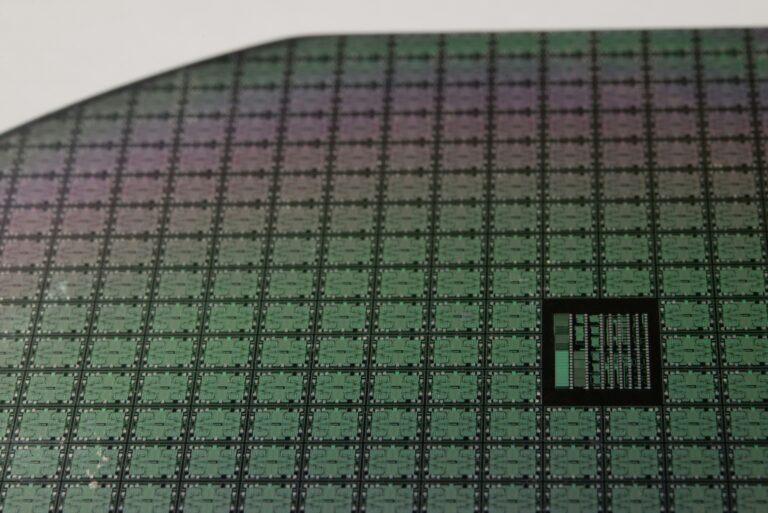
Industrial electronics operate in conditions that would be considered extreme by almost any other standard. Factory floors, outdoor infrastructure, heavy vehicles and process plant equipment expose electronics to temperature swings, vibration, shock, moisture, dust and electromagnetic interference at levels that standard commercial components were never designed to handle. In these environments, the difference between a device that performs reliably for 15 years and one that fails unpredictably after three is rarely down to chance. It is the result of deliberate design decisions and a structured qualification process that systematically proves a device can meet its specification across its full operating life.
For ASICs designed for industrial applications, reliability is not a characteristic that emerges naturally from good design alone. It must be designed in, then demonstrated through testing before a device ever reaches production. Understanding how that process works, what standards govern it, and how qualification requirements shape design decisions, is essential for any engineering team evaluating an ASIC programme or selecting a design partner for a long-life industrial product.
For a broader introduction to custom IC design for industrial applications, see our practical guide.
What reliability qualification means for an industrial ASIC
There is an important distinction between designing a device to a specification and proving that it will meet that specification in the field. The first is engineering. The second is qualification.
Qualification is the structured test regime that validates design decisions before a device enters production. It subjects prototype devices to accelerated stress conditions, operating extremes and environmental challenges that compress years of real-world exposure into weeks of controlled testing. The goal is not to destroy devices for its own sake, but to identify failure modes, verify that the design has adequate margin, and generate the statistical evidence needed to predict long-term reliability with confidence.
For industrial ASICs, this matters more than in almost any other application domain. Industrial systems are typically expected to operate continuously for 10 to 20 years. They are often deployed in locations where field replacement is costly or impractical. The consequences of failure, whether production downtime, safety incidents or damaged capital equipment, can far exceed the cost of the device itself. A qualification programme is a form of risk management that protects both the device manufacturer and the end customer throughout the programme’s life.
Qualification also involves two complementary activities: design for reliability, which covers the decisions made during the design phase to build in resilience; and qualification testing, which provides the empirical evidence that those decisions have achieved their intended outcome. The two are inseparable. A device with a sound design but inadequate testing carries unknown risk. A device subjected to rigorous testing without sound design principles underneath will simply fail the tests.
Key standards that govern industrial ASIC reliability

The standards landscape for semiconductor reliability is shaped by JEDEC, the global standards body for the microelectronics industry. JEDEC publishes the primary qualification and reliability testing standards that govern how semiconductor devices, including ASICs, are tested and qualified before production release.
JESD47, the JEDEC standard for stress-test-driven qualification of integrated circuits, defines the overall qualification flow for new devices. It specifies which stress tests must be performed, the acceptance criteria, and the sample sizes required to draw statistically valid conclusions. For an industrial ASIC programme, JESD47 is the baseline qualification framework from which the specific test plan is built.
The JESD22 series provides the detailed methodology for individual stress tests. JESD22-A108 governs temperature, bias and operating life testing, which underpins HTOL. JESD22-A110 covers highly accelerated stress testing. Other documents in the series address thermal cycling, mechanical shock, vibration, humidity and electrostatic discharge. Together, the JESD22 series provides the technical specification for how each class of stress test is actually conducted.
For applications where functional safety is a requirement, IEC 61508 applies. This is the international standard for electrical, electronic and programmable electronic safety-related systems. Where an industrial ASIC forms part of a safety function, its design, verification and validation must satisfy the appropriate Safety Integrity Level (SIL) requirements. This introduces additional obligations around fault detection coverage, diagnostic mechanisms and the systematic control of hardware random failure rates.
Sector-specific standards may also be relevant depending on the application. Industrial machinery applications often reference ISO 13849, which addresses safety-related parts of control systems. Applications in process industries may reference IEC 61511. The practical implication is that an industrial ASIC programme requires the qualification framework to be scoped against the specific application from the outset, rather than applying a one-size-fits-all approach.
The main qualification test methods
High Temperature Operating Life (HTOL)
HTOL is the cornerstone of semiconductor reliability qualification. It subjects devices to elevated temperature and operating voltage simultaneously, with the device powered and exercising its functional circuits, for an extended period, typically 1,000 hours at 125 degrees Celsius or above.
The scientific basis for HTOL is the Arrhenius equation, which models how the rate of thermally activated failure mechanisms, such as electromigration, oxide degradation and ionic contamination, increases with temperature. By operating at elevated temperature, HTOL accelerates these mechanisms and compresses the equivalent of many thousands of operating hours into a manageable test duration. The acceleration factor depends on the temperature delta between test conditions and the intended use conditions, which is why the choice of test temperature is calculated rather than arbitrary.
For an industrial ASIC designed to operate across a wide temperature range, HTOL provides evidence that the device will not experience wear-out failures within its intended service life. The test sample size is set to achieve a target confidence level and acceptable risk of undetected failures, both of which are specified in JESD47.
Highly Accelerated Stress Test (HAST)
HAST applies combined temperature, humidity and bias stress to identify failure mechanisms related to moisture ingress and ionic contamination. It operates at conditions typically in the range of 110 to 130 degrees Celsius and 85 per cent relative humidity, with the device biased during the test.
The distinction between HAST and HTOL is important. HTOL accelerates thermally driven wear-out mechanisms by elevating temperature alone. HAST accelerates moisture-driven failures by combining elevated temperature with high humidity. The two tests are complementary rather than interchangeable. For industrial ASICs deployed in environments with elevated humidity, chemical exposure or temperature cycling that drives condensation cycles, HAST is a particularly relevant qualification test.
The older autoclave test, sometimes called pressure cooker testing, applied unbiased humidity stress. HAST has largely replaced it for modern qualification programmes because the addition of bias voltage during the test more accurately represents the failure modes that occur in operating devices.
Burn-in testing
Burn-in is a screening tool as well as a qualification technique. It subjects devices to elevated temperatures and voltages for a shorter period than HTOL does, to identify and eliminate devices with latent defects that would cause early field failures. This exploits a well-understood phenomenon in semiconductor reliability, sometimes described as the early failure region of the bathtub curve, where a small proportion of devices in any production lot contain manufacturing defects that cause them to fail shortly after being put into service.
At the qualification stage, burn-in data informs the reliability model and validates that the early failure rate is within acceptable limits. In production, burn-in may be applied as a 100 per cent screen on devices for high-reliability applications, ensuring that only devices that have survived the screen are shipped. For industrial applications where field failure costs are high and replacement is difficult, production burn-in can form part of the supply quality assurance programme.
Ross Turnbull, Director of Business Development, Swindon Silicon Systems explains:
“We can conduct tri-temperature and burn-in testing at both wafer and package levels. Combined with targeted yield improvement strategies, this supports field failure rates of less than one part per million.”
ESD and latch-up testing
Electrostatic discharge (ESD) is a major cause of both immediate and latent failure in semiconductor devices. An ESD event occurs when a charged object, which in a manufacturing or field environment could be a person, a tool or another component, discharges through the device, generating a current pulse that can destroy or degrade internal circuitry. For industrial ASICs, ESD robustness is a design and qualification requirement because the environments in which these devices operate, particularly during assembly, installation and maintenance, present significant ESD exposure.
JEDEC and ESDA (Electrostatic Discharge Association) standards define the test models used to characterise ESD robustness. The Human Body Model (HBM) simulates discharge from a charged person. The Charged Device Model (CDM) simulates the device itself accumulating charge and then discharging during handling. Both are relevant to industrial assembly environments.
Latch-up is a separate failure mode that occurs when parasitic transistor structures within a CMOS circuit are triggered into a low-impedance conducting state, potentially causing destructive current flow. It can be triggered by overvoltage transients, ESD events or current injection, all of which are realistic threats in industrial electrical environments. Latch-up testing per JEDEC standard JESD78 is a standard part of the qualification programme for CMOS ASICs intended for industrial use.
Thermal cycling and mechanical stress testing
Industrial ASICs experience repeated thermal cycling throughout their service life as ambient temperatures rise and fall, as equipment is powered on and off, and as the device self-heats under varying loads. The mechanical stresses generated by differential thermal expansion between the silicon die and the package materials can, over time, cause fatigue failures at bond wire or package interfaces.
Thermal cycling tests per JESD22-A104 cycle devices between temperature extremes, typically -40 to +125 degrees Celsius for industrial-grade qualification, over a defined number of cycles. The test is designed to accelerate thermomechanical fatigue and identify weaknesses in the package assembly before they become field failures.
Mechanical shock and vibration testing is also part of the qualification programme for devices that will be deployed in environments with significant mechanical loading, such as factory automation, heavy vehicles or rotating machinery. These tests verify that the device can withstand the dynamic forces it will experience in service without mechanical failure.
How qualification requirements shape design decisions

Qualification testing does not happen at the end of an ASIC programme as a final hurdle to clear. The requirements of the qualification tests, and the failure modes they are designed to expose, must inform design decisions made long before a device reaches silicon.
Process technology selection
The choice of semiconductor process technology sets fundamental boundaries on the device’s thermal capability, voltage tolerance, and resistance to radiation and ionising effects. For industrial ASICs, process selection must account for the temperature range the device will operate across, the supply voltage and transient environment, and the long-term availability of the process node, since a device designed on a process technology that reaches end of life before the product does creates an obsolescence problem.
Older, more mature process nodes are often preferred for industrial applications precisely because they offer proven long-term availability, better-characterised reliability data, and transistor structures with larger geometry that suit the demands of mixed-signal design. The performance and power-density advantages of advanced nodes are often less relevant to mixed-signal industrial ASICs than the reliability and longevity advantages of mature processes.
Material selection and packaging
The package that surrounds an ASIC die is not simply a mechanical carrier. It is a critical part of the reliability solution.
Ross Turnbull explains that the packaging must protect the die, facilitate miniaturisation and enable seamless integration into the final system, ensuring the ASIC can operate reliably, whether that means withstanding vibration in industrial settings, dissipating heat in compact electronics or preserving signal integrity in demanding environments.
For industrial applications, packaging material selection must account for the thermomechanical properties of all materials in the assembly, individually and collectively, to ensure the device is not unduly stressed over its full operating range and lifetime. Passivation layers contribute to stress mitigation as well as moisture and chemical resistance. For devices deployed in particularly harsh environments, such as those with exposure to corrosive chemicals or high-humidity conditions, hermetic packaging provides a leak-proof barrier between the sensitive circuitry and the surrounding environment.
The over-moulding compound used in plastic packages must be selected for its mechanical properties under vibration as well as its thermal performance. In high-vibration industrial environments, an over-moulding compound that becomes brittle at low temperatures or has a significant coefficient of thermal expansion mismatch with the die and substrate can generate stress that accumulates and leads to fatigue failures over time.
Derating and design margin
Designing to the nominal specification is not sufficient for a long-life industrial device. Good design practice for high-reliability applications requires derating, operating components below their maximum rated conditions to provide margin against stress accumulation over the product lifetime, and guarding across process, voltage and temperature (PVT) corners to ensure the design functions correctly across the full range of manufacturing variation and environmental conditions it will encounter.
PVT corner analysis is a standard part of the ASIC design and verification process. It involves simulating the circuit under combinations of worst-case process variations (slow and fast corners), supply-voltage extremes (minimum and maximum), and temperature extremes (the full industrial or automotive temperature range, as applicable). Passing PVT corner analysis demonstrates that the design is functionally robust across expected process, voltage, and temperature variations. However, it does not guarantee successful qualification, as qualification testing additionally validates long-term reliability, failure mechanisms, and manufacturing-related effects that are not fully captured in simulation.
Built-in diagnostics and fault detection
For applications subject to functional safety standards, the ASIC design must include diagnostic mechanisms that detect hardware failures during operation and either report them to the system or take appropriate action to maintain safe operation. The coverage of these diagnostics, expressed as a diagnostic coverage metric under IEC 61508, determines the device’s contribution to the overall system safety case.
Built-in diagnostics are also valuable in non-safety-critical applications because they support predictive maintenance strategies. An ASIC that can detect and report open or short circuits, over-temperature conditions, or signals that fall outside expected operating ranges gives the wider system visibility of its own health, enabling maintenance intervention before a failure causes downtime. For more on how these capabilities are applied in practice, see our sensing solutions.
What to look for in a qualification-ready ASIC partner
The depth and rigour of an ASIC qualification programme depends significantly on the capabilities and experience of the design partner. For industrial programmes with decade-long lifecycles and demanding operating conditions, the following are the most important things to verify.
Quality management system
A credible partner should operate under a certified quality management system. BS EN ISO 9001 certification is the baseline expectation for an industrial supplier, providing assurance that quality processes are documented, audited and continuously improved across design, test and supply operations.
Swindon Silicon operates to BS EN ISO 9001 standards across its UK facilities.
Qualification infrastructure and test capability
A credible partner should have established test infrastructure for HTOL, HAST, burn-in, ESD and thermal cycling, either in-house or through a well-managed relationship with a qualified third-party test facility. They should be able to provide qualification data, not just assurances. Our ASIC design examples illustrate the range of industrial applications this qualification infrastructure supports.
Foundry relationship and process knowledge
The quality of the foundry relationship directly affects the reliability of the silicon. A partner with deep knowledge of the process technologies they use, and a well-managed relationship with their foundry or foundries, is better placed to make sound process selection decisions, manage process change notifications, and support the device through long-term supply.
Design-for-reliability as a standard practice
Reliability should be embedded in the design methodology, not retrofitted at the qualification stage. This means PVT corner analysis as a standard verification requirement, packaging specification informed by the application environment, and material selection that accounts for the full thermomechanical demands of the operating conditions.
Production test rigour
Qualification testing validates the design. Production testing validates every device that ships. A partner with robust production test coverage, including tri-temperature testing and burn-in screening for high-reliability applications, provides the assurance that qualification performance translates into consistent field performance. Sub-PPM field failure rates are achievable and should be a stated programme objective.
Long-term supply commitment
For industrial programmes running for 15 to 20 years, the qualification data is only as valuable as the supply commitment behind it. A partner who actively manages obsolescence risk, maintains long-life process roadmaps, and supports customers through end-of-life transitions with last-time buy and process transfer options is providing a fundamentally different level of assurance than one focused solely on the design deliverable.
Conclusion
Reliability in an industrial ASIC is not a single design decision or a single test result. It is the cumulative outcome of process technology selection, material and packaging engineering, design margin, verification rigour and a systematic qualification programme that subjects devices to the real-world stresses they will face, in accelerated form, before they ever enter production.
Understanding the qualification framework, from JEDEC standards and HTOL testing through to ESD robustness and thermal cycling, allows engineering teams to ask the right questions of their design partner and to assess whether the reliability claim behind a device is supported by the evidence needed to justify confidence over a long product life.
Swindon Silicon Systems has been designing and delivering ASICs for industrial applications since 1978. As a full turnkey partner, covering design, test and supply under one roof, Swindon Silicon supports industrial programmes from initial specification through to long-term supply, with the reliability data to back every device it ships.
If you are specifying an ASIC for a demanding industrial application and want to understand how the qualification process would apply to your programme, get in touch with the Swindon Silicon team.